
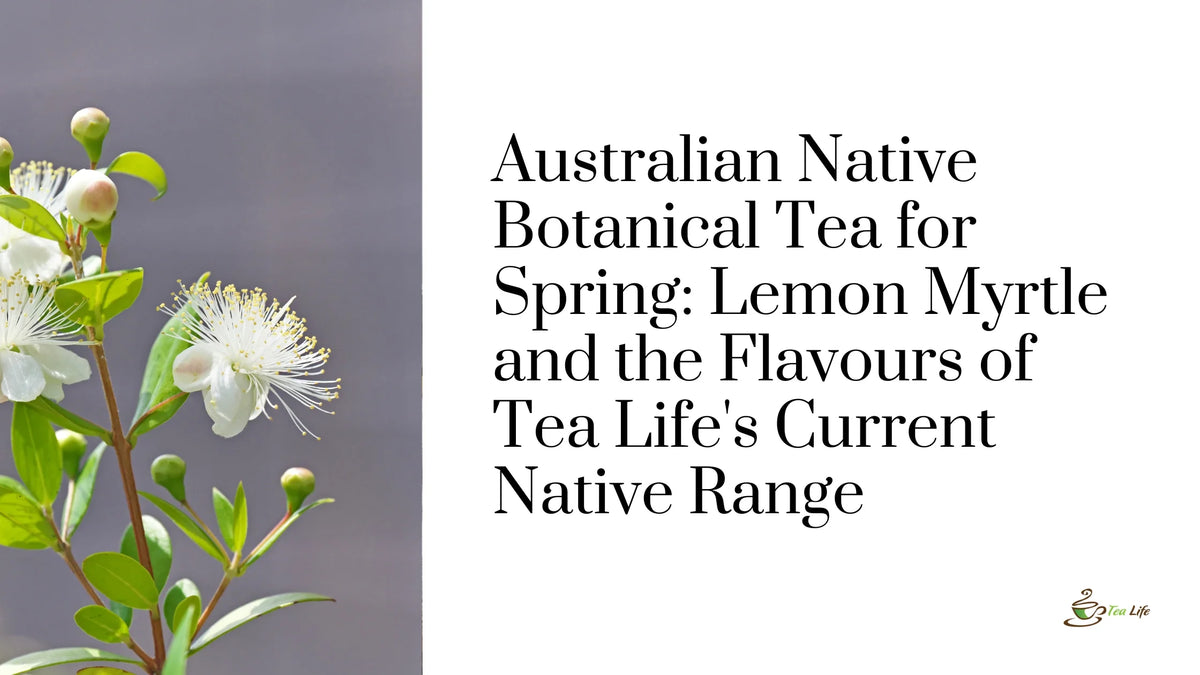
Australian native botanicals bring a different set of flavours and aromas to the teacup. From bright Lemon Myrtle to sweet Honey Myrtle and earthy Wattleseed, these ingredients offer plenty of ways to explore Australian native tea in spring.
Tea Life's current Australian Native Tea collection includes both pure native botanical infusions and blends that combine native ingredients with traditional tea. Knowing the difference can help you choose a tea based on flavour, caffeine content and how you want to serve it.
Whether you are looking for a bright citrus infusion, a warming native blend or something to serve over ice, there are several options to explore.
What Is Australian Native Botanical Tea?
Australian native botanical tea refers to an infusion or tea blend that contains ingredients from Australian native plants.
Some products in Tea Life's native range use a single native botanical as the main ingredient. Lemon Myrtle Tea, for example, is made from dried Lemon Myrtle leaves. Other products combine native botanicals with traditional tea.
This distinction matters because the base ingredients affect both flavour and caffeine content.
A pure herbal infusion made from a native botanical does not contain caffeine from Camellia sinensis. A blend that contains green tea or black tea will naturally contain caffeine from the traditional tea leaves.
Tea Life's Australian Native Tea collection currently includes products such as Lemon Myrtle, Cinnamon Myrtle, Strawberry Gum, Aniseed Myrtle, Jilungin, Honey Myrtle, Wattleseed, Lemon Gum and Mountain Pepperberry, alongside native tea blends.
Lemon Myrtle Tea: A Bright Citrus Native Botanical
Lemon Myrtle is one of the most recognisable flavours in Tea Life's native range.
Tea Life's Lemon Myrtle Tea is made from dried Lemon Myrtle leaves and has a bright citrus aroma. Its flavour is fresh and lemony, with a crisp herbal edge and a clean finish. The infusion has a pale yellow to light gold colour.
The flavour is naturally suited to spring because it is light, fresh and easy to serve in different ways.
For a simple hot cup, Tea Life recommends using 1 to 2 teaspoons with freshly boiled water and steeping for around 5 to 7 minutes. Lemon Myrtle can also be served chilled.
For a different flavour profile, try it with ingredients such as ginger, mint or lemongrass. A little honey can also soften the acidity.

Lemon Myrtle for Iced Tea
Lemon Myrtle is particularly easy to adapt into an iced drink.
Brew the leaves with hot water, allow the infusion to cool, then pour over ice. You can also prepare a larger batch and refrigerate it for a ready-to-serve spring drink.
Fresh lemon, mint or a small amount of honey can be added depending on the flavour you want.
Honey Myrtle for a Softer Citrus Flavour
Honey Myrtle offers another citrus-led option, but with a different character from Lemon Myrtle.
Tea Life describes its Honey Myrtle Native Tea as sweet and lemony, with floral and soft honey notes. The infusion has a light, smooth mouthfeel and a pale golden-yellow colour.
It can be enjoyed hot or chilled, making it suitable for different spring occasions.
Try it on its own when you want the native botanical flavour to remain the focus. It can also work alongside fruit or herbal ingredients when creating your own blend.
For an afternoon spring drink, Honey Myrtle can be served chilled with ice and fresh fruit.
Cinnamon Myrtle for Warm Native Spice
Not every native botanical has a citrus profile.
Cinnamon Myrtle brings a warmer flavour to the range, with a softer cinnamon character and gentle spice. Tea Life's native tea collection includes Cinnamon Myrtle Tea as a single botanical option.
This makes it useful when you want something more aromatic and warming, even as the weather starts to change.
Cinnamon Myrtle can be brewed as a straightforward herbal infusion or combined with other ingredients. Try it hot with a little honey, or experiment with it alongside fruit and other native botanicals.
Its softer spice character can also work well with spring baking and light desserts.
Strawberry Gum for a Fruitier Native Profile
Strawberry Gum brings a different direction to Australian native tea.
Tea Life's current native range includes Strawberry Gum Native Tea, as well as Strawberry Peppermint Gum Bush Tea.
These options provide an opportunity to explore native botanicals beyond the more familiar lemon and spice profiles.
If you are building a native tea selection for spring, Strawberry Gum can add variety to a collection that already includes citrus, floral and herbal flavours.
Try it hot when you want to focus on the aroma, or experiment with chilled preparation for a different serving style.
Aniseed Myrtle for Sweet Spice
Aniseed Myrtle adds another aromatic profile to Tea Life's native range.
As the name suggests, it has an aniseed character that makes it quite different from citrus-led native teas such as Lemon Myrtle and Honey Myrtle.
It can be enjoyed on its own or used as part of a broader herbal tea selection.
For customers exploring Australian native botanicals for the first time, Aniseed Myrtle can be a useful introduction to the wider range of native flavours available beyond the more familiar tea styles.
Wattleseed for Roasted and Nutty Notes
Wattleseed offers one of the most distinctive flavour profiles in the native collection.
Rather than citrus or floral notes, Wattleseed brings roasted, nutty and earthy characteristics.
It is also used in some Tea Life blends. Australian Bush Breakfast Tea combines Bush Black Tea with Wattleseed, Cinnamon Myrtle and Aniseed Myrtle. The result is a robust breakfast-style tea with a malty black tea base and roasted, lightly spiced native character.
Because this blend contains black tea, it naturally contains caffeine.
This is a good example of why checking the ingredients matters when choosing an Australian native tea. A product can contain native botanicals while still being a traditional caffeinated tea blend.
Pure Native Botanicals vs Native Tea Blends
Tea Life's current native range includes both single-botanical products and blends.
Understanding the difference makes it easier to choose the right product.
Pure Native Botanical Infusions
Products such as Lemon Myrtle Tea and Honey Myrtle Native Tea use native botanical ingredients as the basis of the infusion. Tea Life identifies both as caffeine-free herbal infusions.
These are suitable choices if you want to explore the individual flavour of a native plant without a traditional tea base.
Native Botanical Blends
Other products combine native ingredients with traditional tea.
Australian Bush Sunrise Tea, for example, combines First Harvest Green Tea with Lemon Myrtle, Finger Lime and native Lemongrass. The green tea gives the blend a clean vegetal base, while the native ingredients add bright citrus and herbal notes.
Because it contains green tea, Australian Bush Sunrise naturally contains caffeine.
It can be brewed hot or served iced. Tea Life recommends using 75 to 80°C water and steeping for 2 to 3 minutes. For an iced version, the product page recommends using more tea, brewing at the same temperature and pouring over ice. Cold brewing is another option.
Australian Bush Breakfast Tea is another example. It combines Bush Black Tea with Wattleseed, Cinnamon Myrtle and Aniseed Myrtle. The black tea base gives it a stronger breakfast-style character and means it naturally contains caffeine.
More Australian Native Teas to Explore
Tea Life's current native collection extends well beyond Lemon Myrtle.
The range currently includes:
-
And more!
Availability can change, so the current collection is the best place to see which native teas are available to order.
How to Brew Australian Native Tea
Brewing instructions vary between products, so it is worth checking the individual product page before preparing your tea.
For many herbal native infusions, freshly boiled water and a longer steep can help bring out the botanical character.
Traditional tea blends need more specific temperature and timing. For example, Tea Life recommends lower-temperature water for Australian Bush Sunrise because its green tea base can become bitter when brewed with very hot water.
A simple approach is:
-
Check the recommended amount on the product page.
-
Use the recommended water temperature.
-
Steep for the suggested time.
-
Taste before deciding whether you want a stronger infusion.
-
Serve hot or chill the infusion if the product is suitable for iced tea.
Using the right temperature and steeping time can make a noticeable difference to the final flavour.

Australian Native Tea for Spring
Spring is a useful time to explore the different sides of Australian native tea.
For a bright citrus cup, Lemon Myrtle is an obvious place to start. Honey Myrtle provides a softer lemon and floral profile, while Lemon Gum offers a sharper citrus character with herbal and woody notes.
If you prefer warmer flavours, Cinnamon Myrtle, Aniseed Myrtle and Wattleseed offer more spice and roasted notes.
For something suited to a chilled drink, Lemon Myrtle, Honey Myrtle and Lemon Tea Tree can all be served cold. Tea Life's product information specifically lists chilled or iced preparation for these native infusions.
You can also explore native blends such as Australian Bush Sunrise if you want traditional green tea alongside native citrus and botanical flavours.
The best choice depends on whether you want a pure botanical infusion, a traditional tea with native ingredients, a bright citrus profile or something more aromatic and earthy.
Australian Native Tea for Cafés and Wholesale
Australian native botanicals can also be used beyond the home tea cupboard.
Tea Life's Wholesale Hub includes Australian Natives alongside herbal, regular, fruit and iced tea categories. The current wholesale information highlights native ingredients such as Lemon Myrtle, Wattleseed and Jilungin for businesses looking to brew, blend, bottle or serve tea.
For cafés, retailers and other businesses, the range provides different formats and flavour profiles to consider for tea menus and product selections.
Native botanicals can be used in hot tea service, iced drinks and custom blends, depending on the individual ingredient and product.
Businesses interested in exploring the range can visit the Tea Life Wholesale Hub to view the current wholesale offering and application information.
Explore Tea Life's Australian Native Tea Range
Australian native botanicals offer a wide range of flavours to explore, from the bright citrus character of Lemon Myrtle to the softer notes of Honey Myrtle, the warm spice of Cinnamon Myrtle and the roasted character of Wattleseed.
Tea Life's current native collection includes both pure botanical infusions and blends with traditional green or black tea. Checking the ingredients and brewing information makes it easier to choose a tea that suits your preferred flavour and serving style.
For spring, try a bright native botanical served hot or chilled, or explore a native tea blend for a different take on traditional tea.
Share:
Best Teas for Spring in New Zealand: Fresh, Floral and Naturally Caffeine-Free Options for Changeable Weather
Are Herbal Teas Caffeine-Free? A Spring Guide to Rooibos, Chamomile, Hibiscus and Fruit Infusions